
<1s
Data freshness from source to agent context
Convert operational data into agent-ready views using SQL. Eliminate the trade-offs between data freshness and query performance that limit agent capabilities. Materialize maintains up-to-the-second business context without overloading production systems.
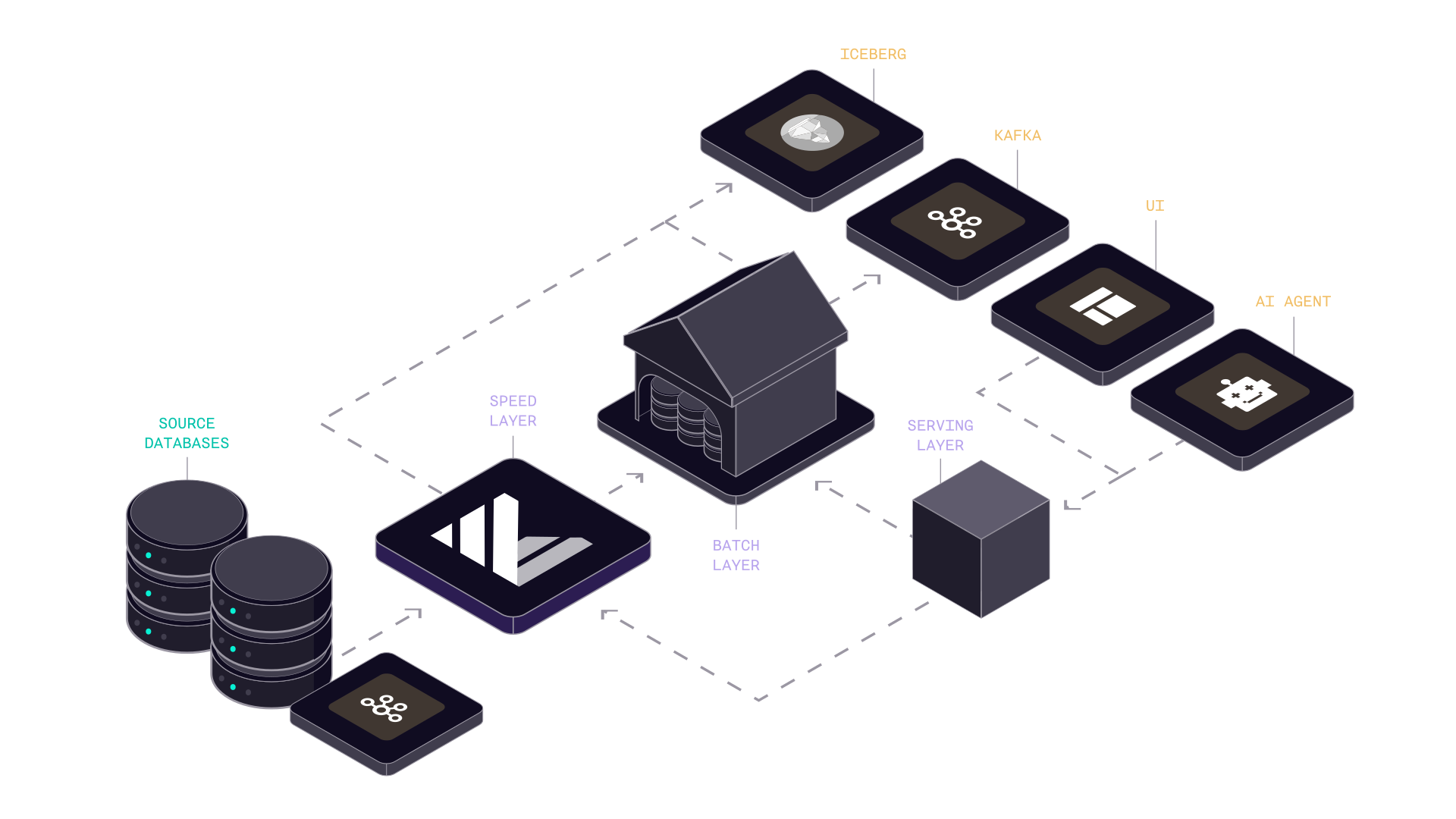
Traditional data infrastructure forces engineers to choose between fresh data with slow queries or fast queries with stale data. AI agents need both—immediate access to current business state without compromising operational systems.
Define business entities as materialized views that update incrementally as source data changes. Agents query pre-computed results instead of complex joins across operational tables, reducing latency and system load.
Publish data products through MCP so agents can discover and access business entities without understanding underlying schema complexity. Control which agents see which data through access policies.
Process updates from operational systems within seconds using change data capture. Agents operate with accurate business context that reflects recent transactions and state changes.
Guarantee strict-serializable consistency across all materialized views. When agents query multiple related entities, results reflect the same logical point in time, preventing inconsistent decision-making.
Update views based on changes rather than full recomputation. Performance depends on update rate, not total data size, enabling cost-effective scaling for high-volume operational systems.
Start with simple views like inventory status and customer preferences. Combine these building blocks to create sophisticated business context. Each new data product exponentially increases agent capabilities without proportional infrastructure costs.
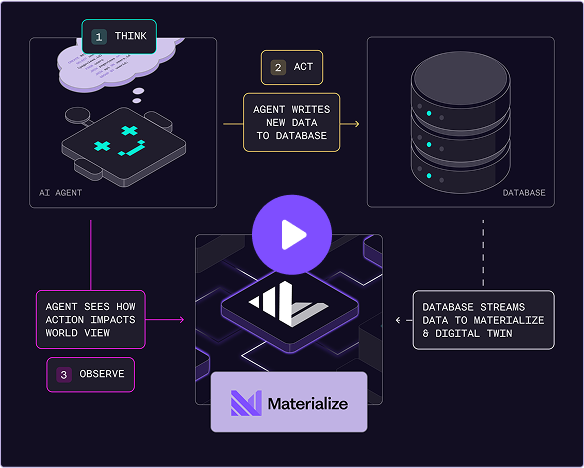
Agents write back to operational systems through standard APIs. Changes flow into Materialize and update downstream views within seconds. Agents see the results of their actions and adapt behavior based on current system state.
Common questions about deploying Materialize for agent workloads and integrating with existing data infrastructure.
Materialize uses differential dataflow to compute only the changes needed to keep views current. When source data changes, the system propagates minimal updates through the view dependency graph rather than recomputing entire results.
Materialize ingests from PostgreSQL, MySQL, Kafka, and cloud storage through change data capture and streaming connectors. Views can join data across multiple sources while maintaining consistency guarantees.
Data products are exposed through the Model Context Protocol (MCP) with metadata describing business entities and their relationships. Agents can query available resources and request structured data without understanding underlying schemas.
Agents interact with operational systems through existing APIs and services. Changes flow back through normal CDC channels and update materialized views, creating closed-loop feedback for agent decision-making.
Start with a free trial or explore Materialize capabilities through interactive demos. Technical documentation and architecture guides help you integrate with existing systems.