170+
SQL underwriting rules with predictable performance
Move beyond siloed data, complex pipelines, and stale warehouses. Build a live data store that scales across teams, sources, and use cases.
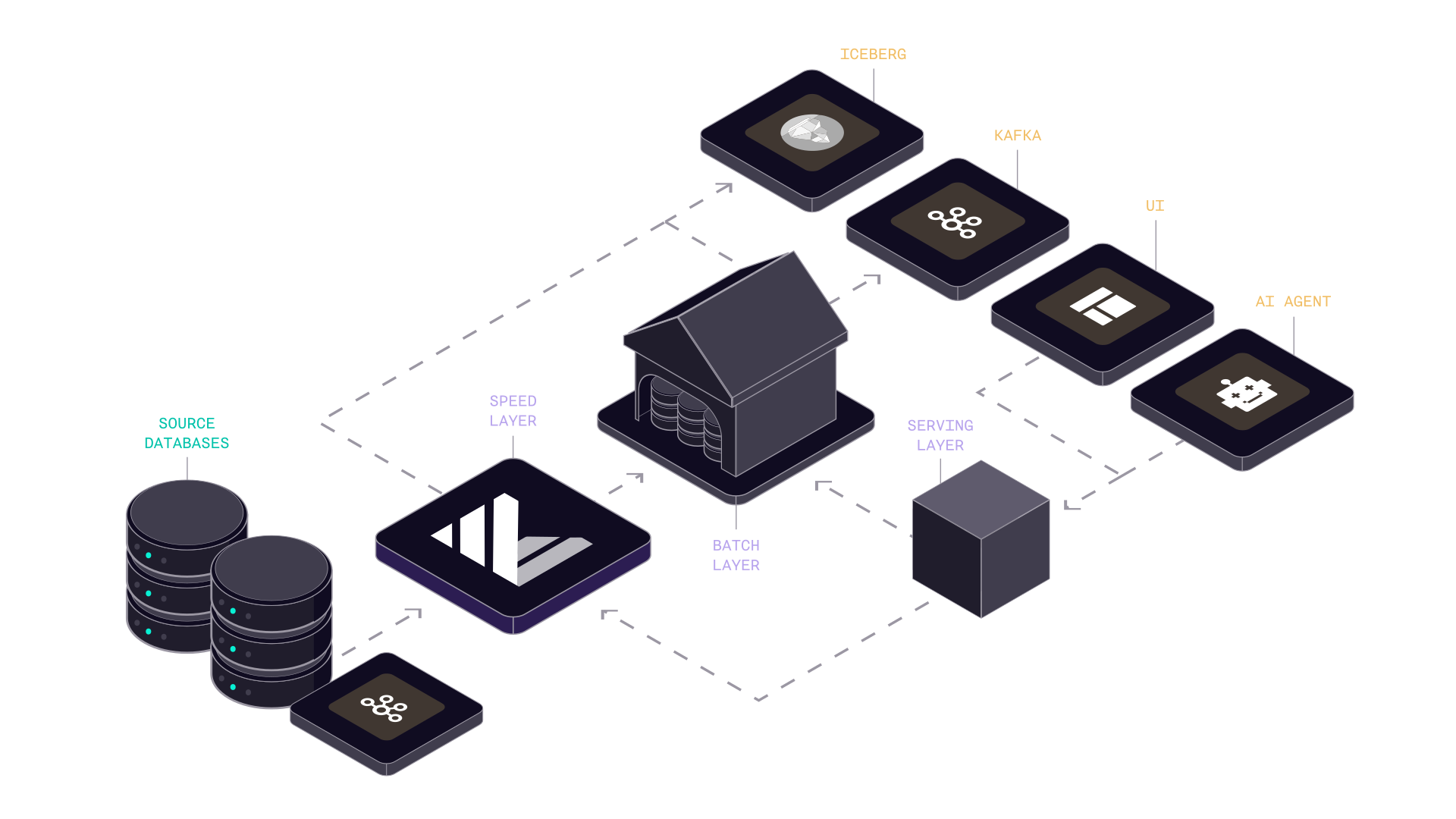
Your applications need operational data from multiple databases, services, and systems. However, combining data sources means either building expensive, complex data pipelines, or using data warehouses which can be hours behind.
Data is siloed across operational databases and systems.
Data pipelines are expensive and hard to change.
Data lakes and warehouses can be hours behind.
The Operational Data Store pattern uses Materialize to unify data from multiple operational systems. Integrate, combine and transform data with SQL, to give applications a single, live source of truth.
Integrate data from databases, services, and systems over CDC or Kafka.
Join and transform data into live views that are always fresh and fast to query.
Use Materialize's Postgres-compatible interface to access unified, live data.

Process high-volume or fast-changing data across multiple sources with consistent performance. Unlike slow batch systems or complex streaming pipelines, Materialize scales with update rate — not data size.
"Datalot has raw tables with over a dozen years of data...with an ongoing need to process terabytes of information...it has never been a problem."

Many sources, many teams, many use cases - with standard SQL.
Integrate data from multiple databases, Kafka, and webhooks without complex pipelines.
Query, combine, and transform data with complex joins, window functions and recursive queries.
Create live views that are fresh and fast, even at millions of events, kept up to date incrementally as underlying data changes.
Connect existing applications, drivers and tools with full PostgreSQL wire protocol compatibility.
Deploy replicas across zones for fault tolerance and resource isolation.
Learn more about Materialize, architectural patterns, and use cases.